California Coastal: The Art of Relaxed, Effortless Living
Where natural beauty, thoughtful design, and everyday comfort come together.
There is something about a California home in the early morning. Sunlight moves across pale wooden floors, doors open toward the garden, and a gentle breeze carries the feeling of the outdoors inside. Nothing feels overly formal or carefully staged. The rooms are beautiful, but they also invite you to sit down, take off your shoes, and stay a while.
That is the spirit of California Coastal design.
More than a decorating trend, California Coastal is an approach to living that celebrates natural materials, open spaces, soft colors, and a relaxed connection to the outdoors. It brings together the simplicity of contemporary design and the warmth of a home that is genuinely lived in.
For this Laviart Living home tour, we imagined a modern California Coastal residence in September, following the changing light from bright mornings to peaceful evenings. Each room has its own personality, but all share the same design philosophy: a home should be as comfortable and functional as it is beautiful.
What Is California Coastal Style?
California Coastal draws inspiration from the architecture, landscapes, and lifestyle of the California coastline.
Its influences include the casual beach houses of Southern California, the clean lines of modern architecture, and the natural materials found in Mediterranean and contemporary interiors.
Unlike traditional nautical decorating, California Coastal doesn’t depend on obvious seaside references. You won’t necessarily find anchors, seashell collections, or rooms filled with blue-and-white stripes.
Instead, the connection to the coast is expressed through the atmosphere of the home.
Think warm white walls reminiscent of sunlit sand, pale oak furniture, linen upholstery, woven baskets, weathered textures, and muted blues inspired by the ocean.
The overall effect is fresh without feeling cold, sophisticated without becoming formal, and relaxed without looking unfinished.
Perhaps its greatest appeal is that it doesn’t ask us to choose between beauty and comfort.
The Defining Elements of California Coastal Design
1. Natural Light and Airy Spaces
Light is one of the most important elements of California Coastal interiors.
Large windows, glass doors, open sightlines, and light-reflecting surfaces help create an airy atmosphere. Window treatments are often simple, allowing daylight to become part of the design.
But an airy room isn’t necessarily an enormous room.
Even a smaller interior can achieve this feeling through thoughtful furniture placement, an uncluttered layout, and a consistent color palette.
2. A Palette Inspired by Nature
California Coastal interiors are known for their understated colors.
The foundation usually includes warm whites, ivory, cream, sand, oatmeal, beige, and soft greige.
Muted ocean blues, sage greens, driftwood browns, and occasional deeper accents bring character without overwhelming the space.
The key is balance. These colors should feel as though they belong together naturally, rather than competing for attention.
3. Materials That Feel Authentic
Natural materials give California Coastal interiors much of their character.
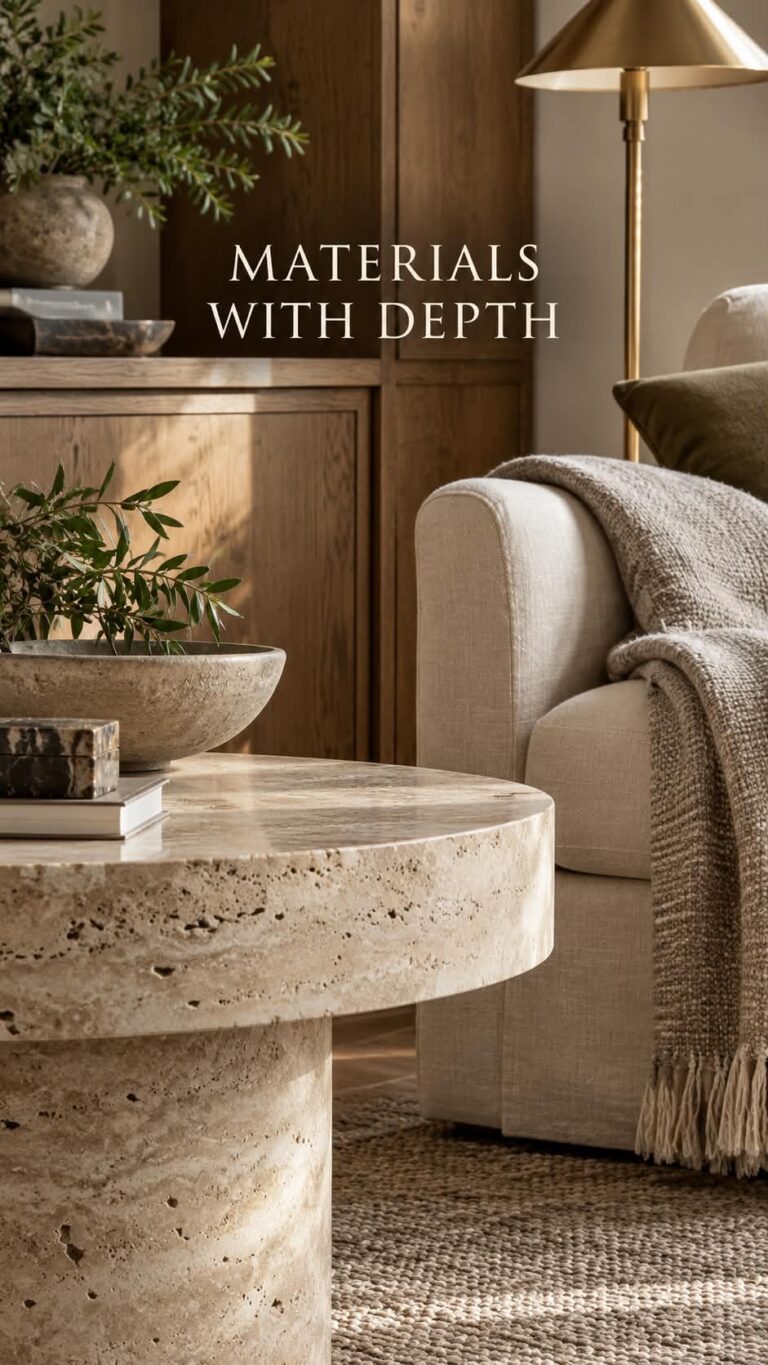
Light oak, stone, linen, cotton, rattan, jute, ceramics, and woven fibers introduce texture and warmth.
Rather than relying on glossy perfection, the style embraces visible grain, subtle variations, and tactile surfaces.
A linen sofa, a handmade ceramic vase, or a woven rug can make a room feel inviting without requiring elaborate decoration.
4. Relaxed but Refined Furniture
Furniture tends to have comfortable proportions, simple silhouettes, and soft edges.
Deep sofas, generously sized armchairs, upholstered beds, and substantial wooden tables encourage people to use and enjoy their spaces.
The goal is not to fill every corner.
A few well-chosen pieces, arranged thoughtfully, often create a more welcoming interior than a room crowded with decorative furniture.
5. A Connection Between Indoors and Outdoors
California Coastal living is closely associated with the relationship between the house and its surroundings.
Sliding doors, patios, covered terraces, outdoor dining areas, and views of greenery help blur the boundaries between interior and exterior spaces.
Even when an ocean view isn’t possible, plants, natural light, organic materials, and garden-facing windows can bring a similar feeling into the home.
6. Functionality Without Sacrificing Beauty
This may be one of the most important characteristics of the style.
California Coastal homes are designed to be lived in.
They accommodate family routines, entertaining, working, relaxing, and everything in between.
Storage is considered carefully. Furniture arrangements support conversation and movement. Materials are selected not only for appearance but also for how they perform in everyday life.
A beautiful room that doesn’t function well is simply not good design.
A California Coastal Home: Room by Room
The Living Room: Airy and Inviting
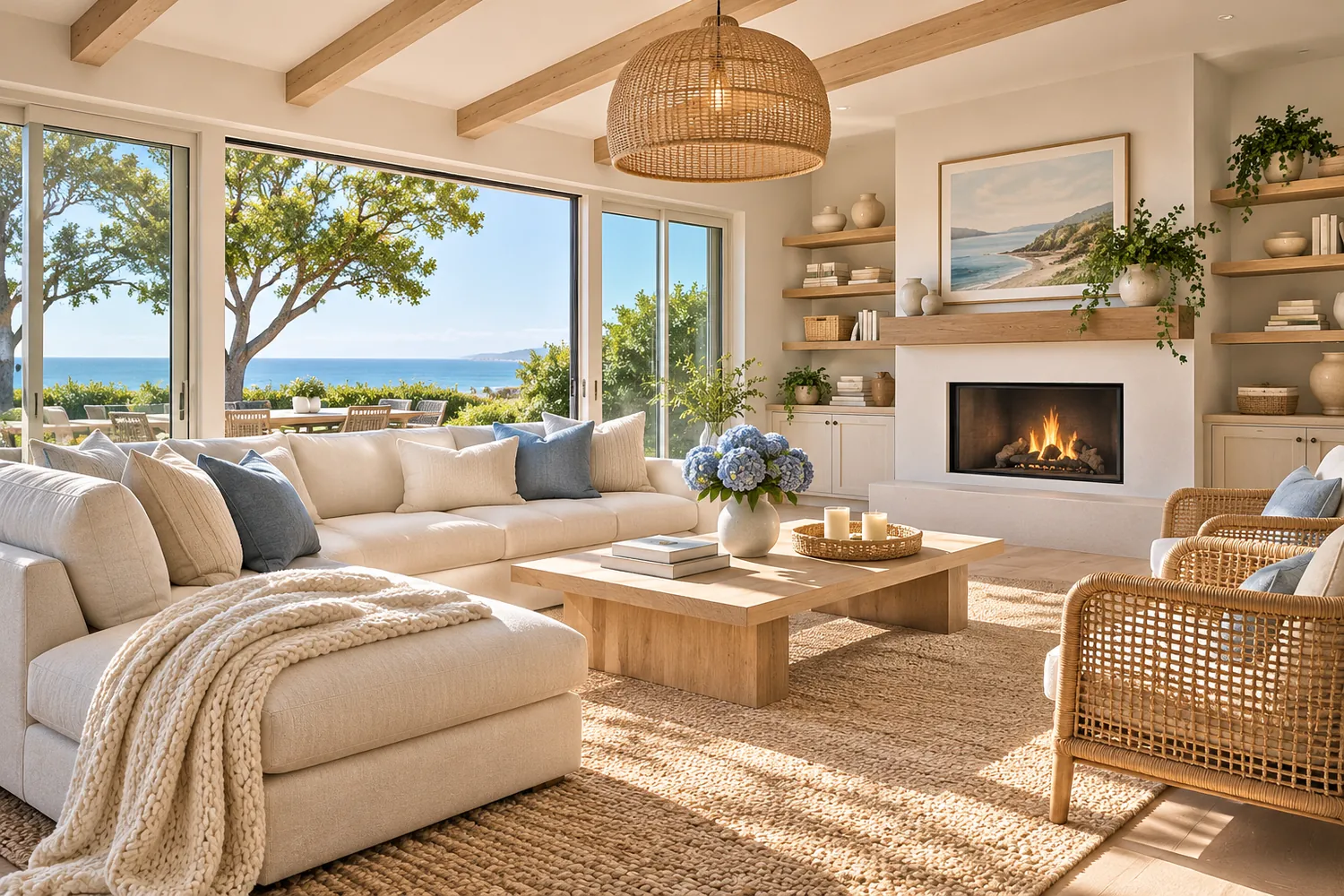
Our tour begins in the living room, where morning sunlight fills the space and creates a gentle connection with the landscape outside.
A neutral sofa, woven armchairs, light wood furniture, and soft blue accents establish the coastal palette.
The room feels open and relaxed, but the furniture arrangement is intentional.
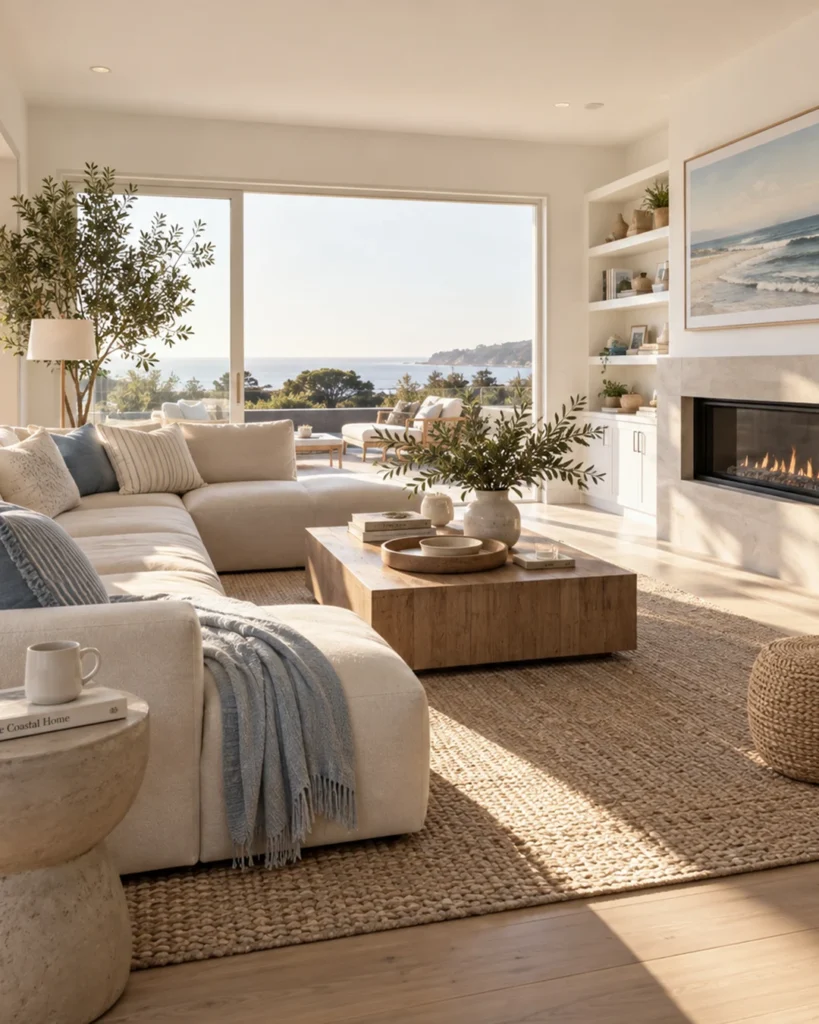
Seating is organized around a central conversation area, with enough space to move comfortably between the sofa, chairs, and outdoor doors.
A generous rug visually connects the furniture, while layered lighting allows the room to transition naturally from daylight to evening.
The result is a space designed equally for quiet mornings, family gatherings, and entertaining friends.
Design takeaway: Create a comfortable conversation area first, then build the decorative layers around it.
The Kitchen: Natural Materials, Everyday Function
In the kitchen, California Coastal design becomes particularly appealing.
Warm wood cabinetry, pale stone countertops, woven bar stools, and understated hardware create a balance between contemporary elegance and natural warmth.
The island becomes the center of daily activity.
It’s where breakfast happens, meals are prepared, children gather, and conversations continue while someone cooks.
But a successful kitchen island needs more than beautiful materials.
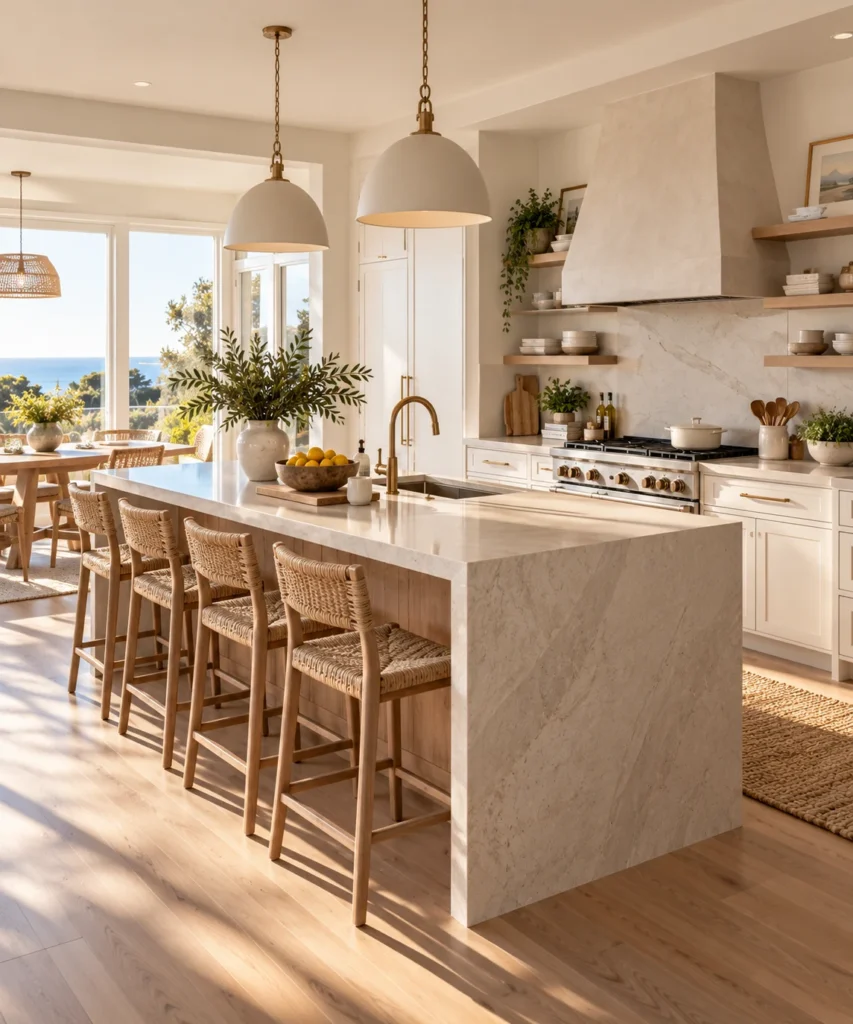
Comfortable seating, practical circulation, accessible storage, and a well-planned relationship between the sink, refrigerator, and cooking area are essential.
Natural daylight enhances the materials, while layered task lighting ensures the kitchen remains functional after sunset.
Design takeaway: An island should support how a family actually uses the kitchen, not simply serve as a decorative centerpiece.
The Primary Bedroom: Serene Evenings
By eight o’clock in the evening, the atmosphere of the house changes.
The bright coastal daylight gives way to softer, warmer lighting, and the primary bedroom becomes a peaceful retreat.
Layered bedding, natural wood, woven accents, and quiet shades of blue and cream create a restful environment.
Here, texture matters more than decoration.
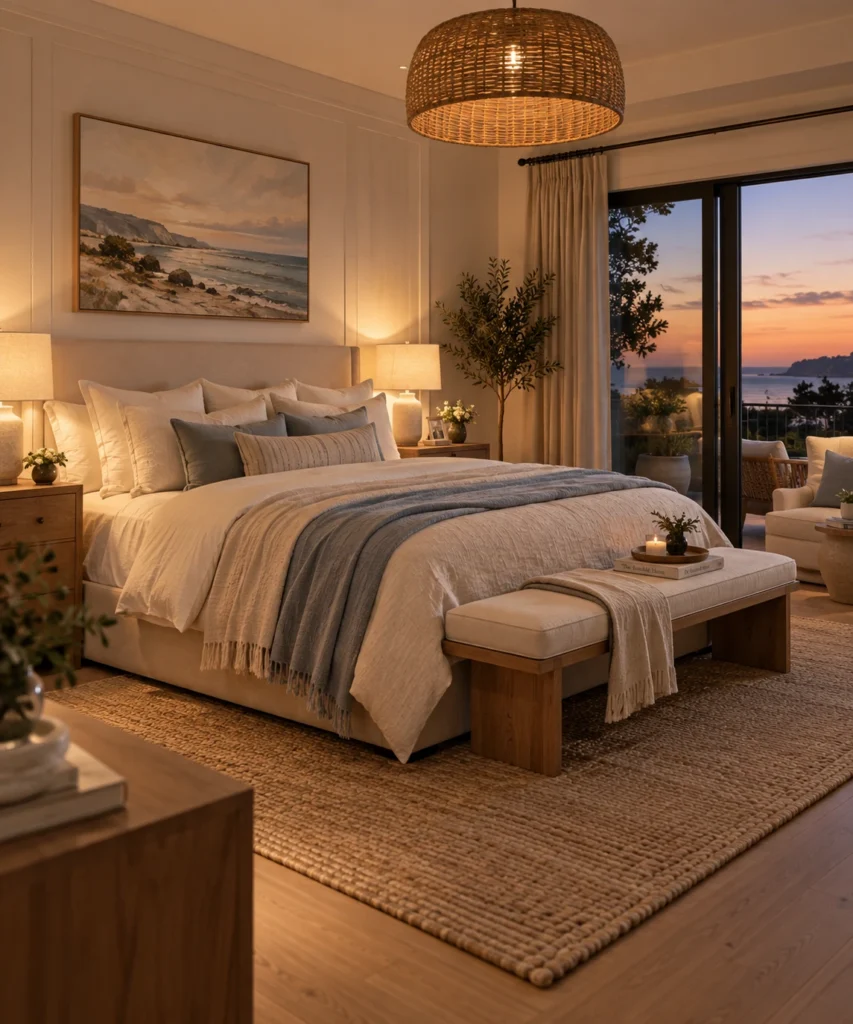
A linen duvet, a softly upholstered headboard, and a natural fiber rug add comfort without introducing unnecessary visual noise.
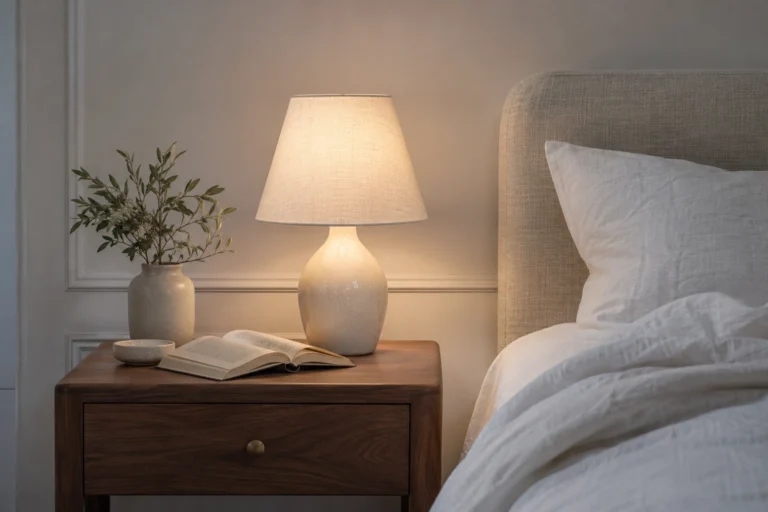
Bedside lighting should be easy to control, while curtains or shades provide privacy and appropriate darkness for sleeping.
A comfortable chair creates a small reading corner without interfering with circulation.
Design takeaway: A restful bedroom depends as much on lighting, comfort, and practical layout as it does on color.
The Children’s Bedroom: Playful Personalities
California Coastal isn’t limited to neutral, adult-oriented interiors.
In our shared bedroom for a ten-year-old girl and a twelve-year-old boy, the design takes on a more colorful and playful character.
The natural wood, woven textures, and light walls maintain a connection to the rest of the house, while individual bedding, colorful toys, books, and personal accessories allow each child to express their personality.
A shared room needs thoughtful zoning.
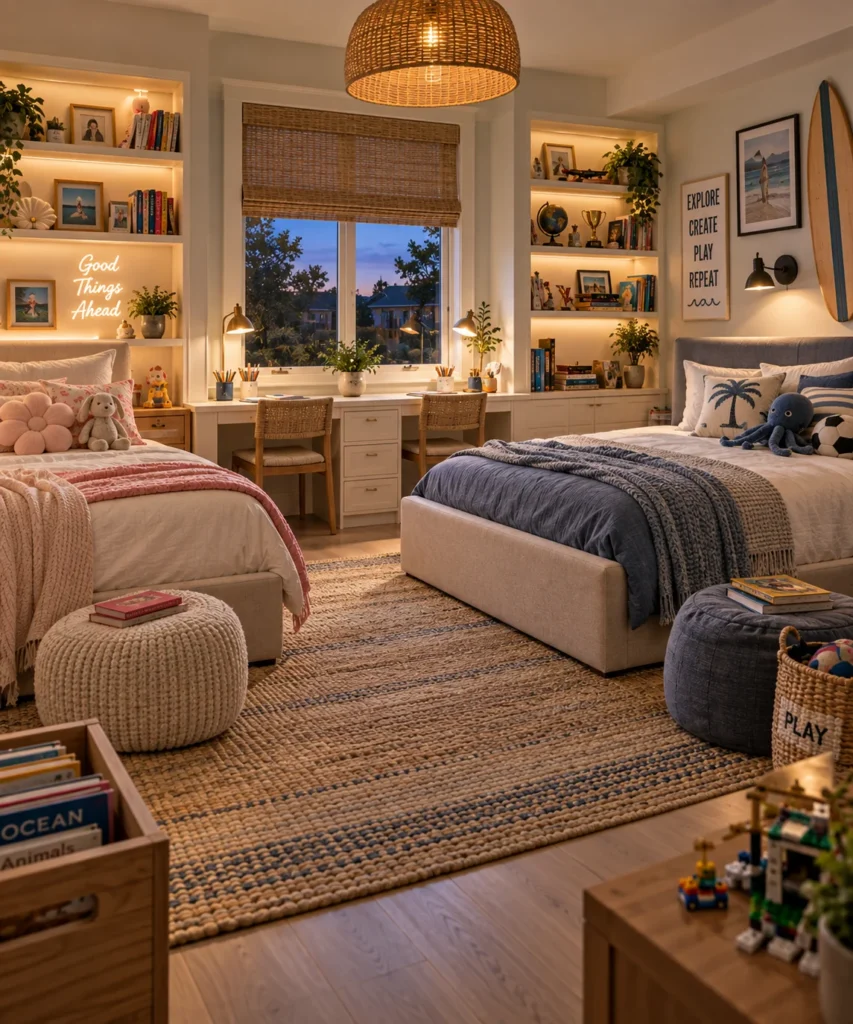
Separate beds, individual storage, and dedicated areas for studying and reading help children develop a sense of ownership over their space.
As children grow, their interests change. Keeping the larger furniture and architectural finishes relatively timeless makes future updates easier.
Design takeaway: Use a calm, flexible foundation and introduce personality through elements that can change over time.
The Primary Bathroom: A Spa-Like Retreat
A California Coastal bathroom should feel refreshing, comfortable, and connected to nature.
Stone surfaces, warm oak cabinetry, soft neutral colors, and carefully selected brass details create an understated sense of luxury.
In our primary bathroom, the focus is on functionality as much as atmosphere.
A generous double vanity provides practical space for two people, while closed cabinetry keeps everyday products organized.
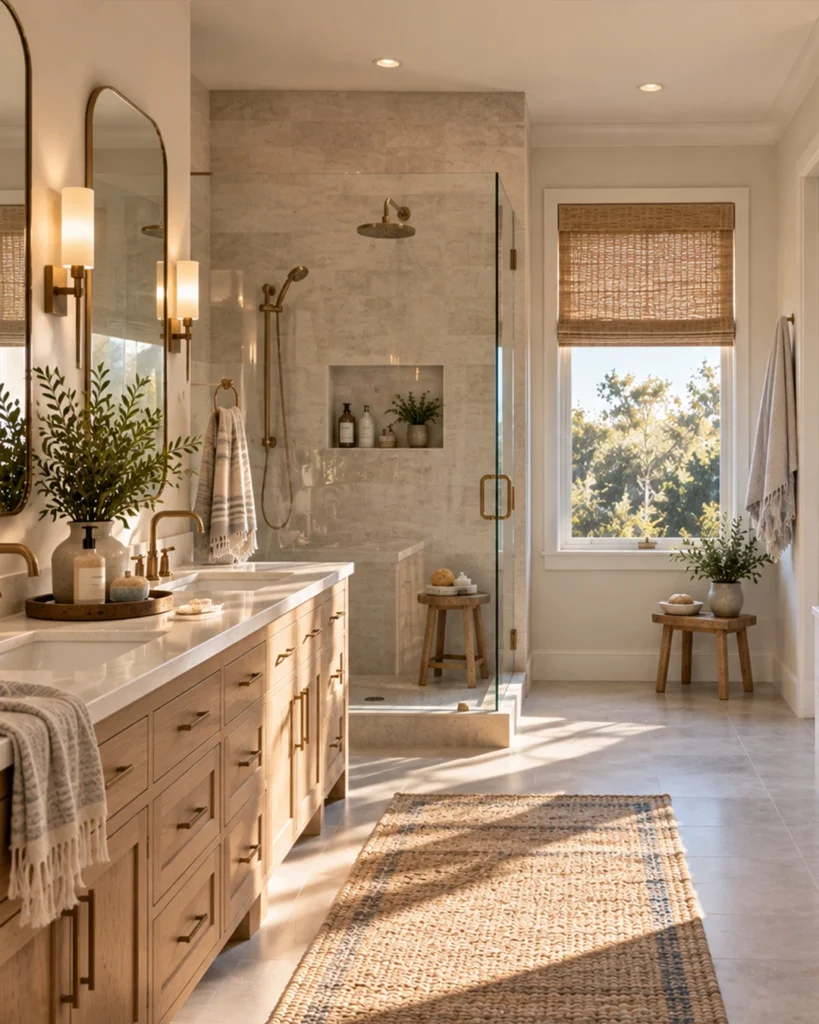
A spacious shower with a properly positioned entrance, convenient controls, and recessed storage makes daily use easier.
The design feels spa-like without requiring excessive decoration.
Natural materials and carefully planned lighting do much of the work.
Design takeaway: Prioritize comfortable clearances, practical storage, easy maintenance, and good lighting before adding decorative details.
The Guest Bathroom: Texture and Warmth
Guest bathrooms offer an opportunity to create a welcoming experience in a relatively compact space.
A warm wooden vanity, soft stone surfaces, woven baskets, linen textiles, and subtle blue accents introduce California Coastal character without overwhelming the room.
Texture is especially important here.
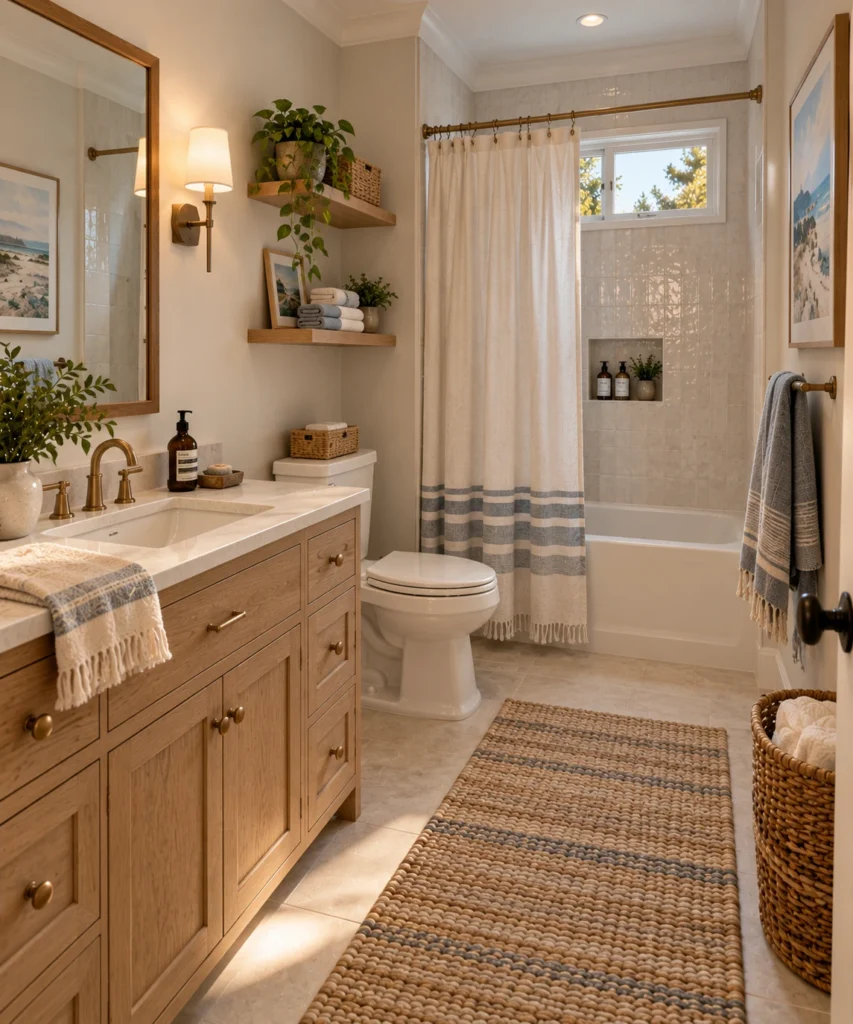
When the color palette is restrained, differences between smooth stone, woven fibers, painted walls, and natural wood create visual interest.
Guests also appreciate practical details: accessible towels, sufficient counter space, good mirror lighting, and somewhere convenient to place personal belongings.
Design takeaway: In a smaller room, thoughtful materials and useful details can have more impact than elaborate decoration.
The Hallway: Breezy and Uncomplicated
Hallways are often overlooked because they aren’t considered destination rooms.
Yet they play an important role in how a home feels.
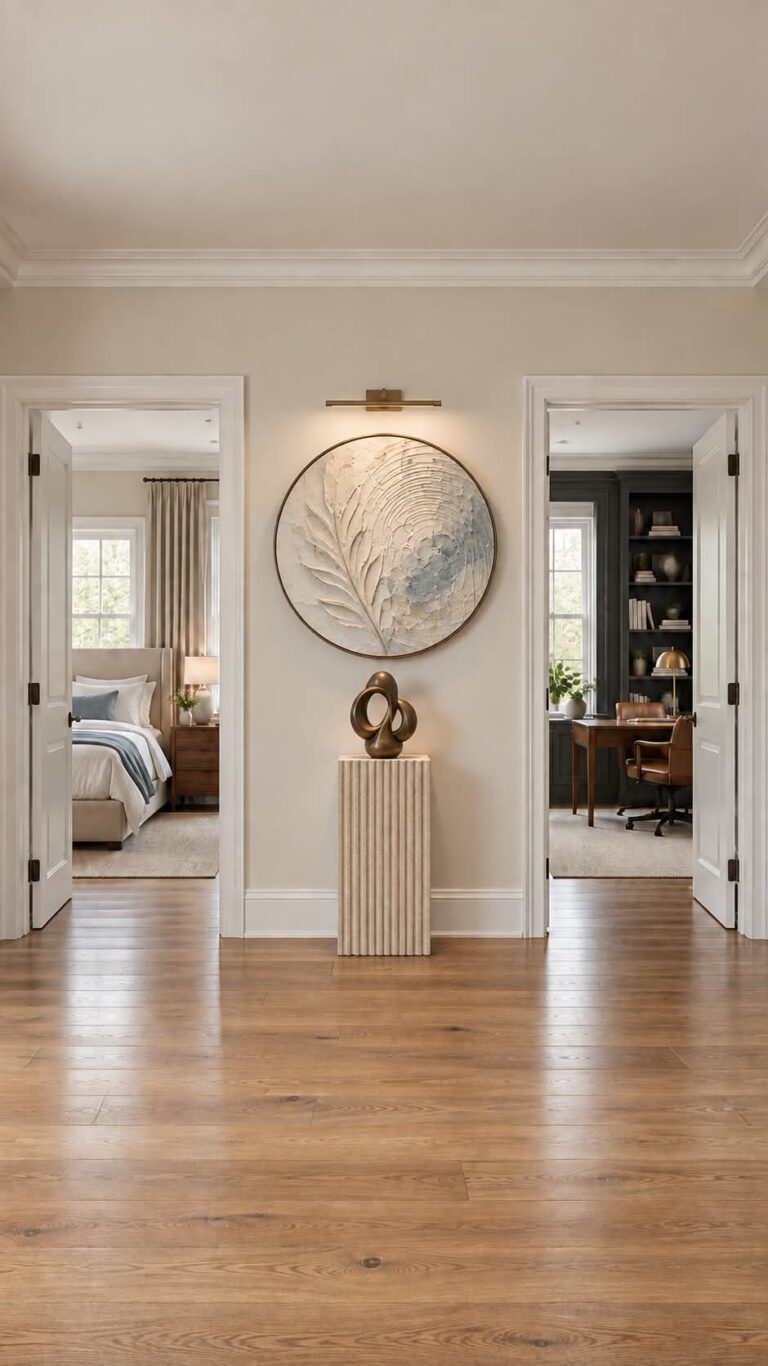
In our California Coastal hallway, warm white walls, natural wood, a woven runner, and understated artwork create a sense of continuity with the surrounding rooms.
The furniture remains relatively simple, allowing the passage to feel open.
A narrow console provides a place for a lamp or decorative objects, while baskets offer occasional storage.
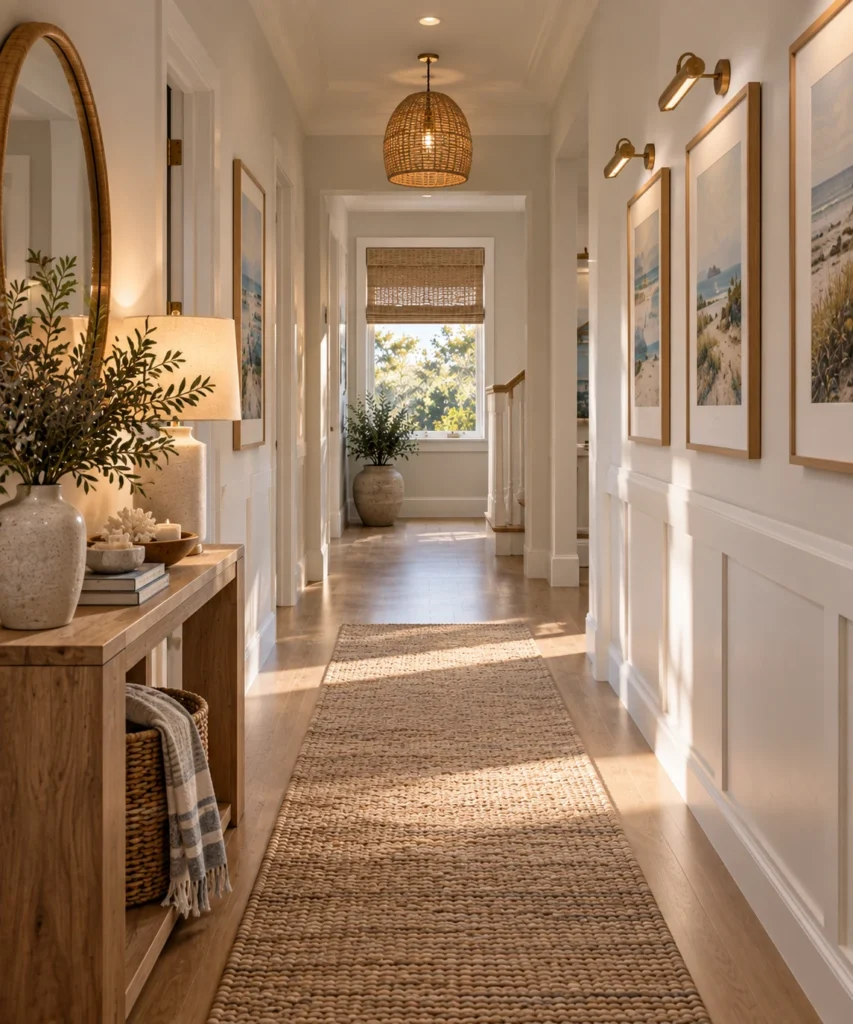
Good hallway design also considers circulation, door clearances, and the placement of furniture so that the space remains comfortable to navigate.
Design takeaway: A hallway should connect rooms visually while allowing people to move through it effortlessly.
The Pantry: Organic and Organized
The little room where happiness is stored.
Pantries may be practical spaces, but they can also become some of the most charming rooms in a home.
Our pantry combines soft sage cabinetry, warm wood countertops, woven baskets, glass storage jars, and natural textures.
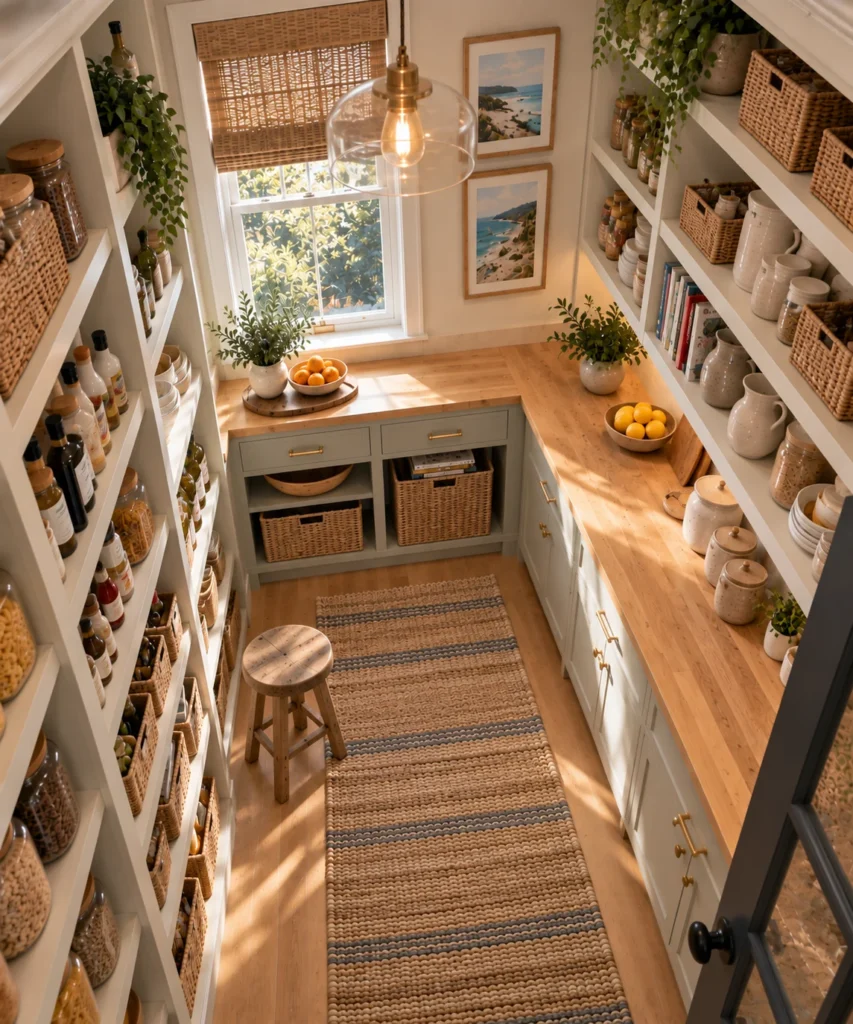
Open shelving makes frequently used ingredients easy to find, while closed cabinets conceal less attractive essentials.
The arrangement is designed around visibility, accessibility, and organization.
Everyday ingredients belong within easy reach. Heavier items should be stored securely on lower shelves, and the central walkway should remain clear.
A pantry doesn’t need to look like a showroom. It needs to make everyday life easier.
Design takeaway: Organize storage around frequency of use, and choose containers that are practical before considering their decorative value.
The Laundry Room: Fresh Design Meets Smart Technology
Laundry rooms and coastal design have more in common than we might initially imagine.
Both suggest freshness, clean fabrics, natural light, and a sense of renewal.
In our laundry room, modern appliances and smart-home features are combined with warm cabinetry, woven baskets, pale surfaces, and soft coastal colors.
The result is contemporary without feeling clinical.
Full-size appliances provide the performance needed for daily laundry, while surrounding cabinetry offers storage for detergents, cleaning supplies, and household essentials.
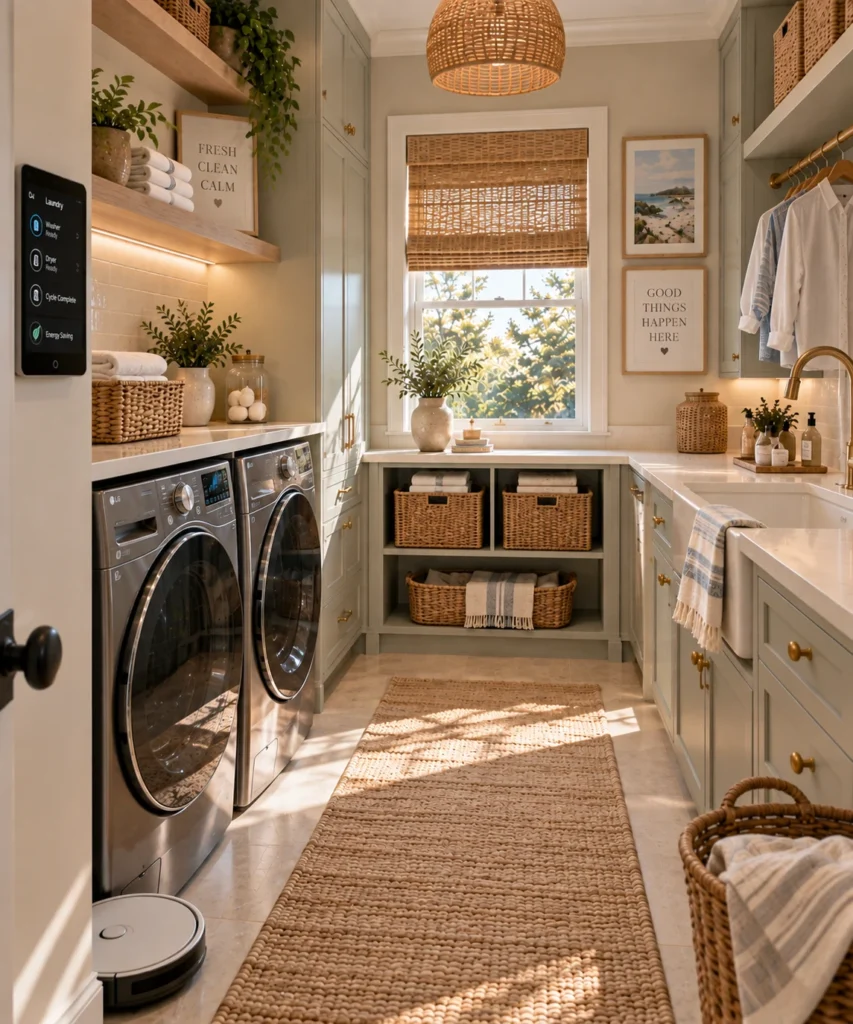
Counter space makes folding easier, and a utility sink adds flexibility.
Smart features, such as cycle notifications and energy monitoring, can make household routines more convenient.
But technology should complement the design rather than dominate it.
Design takeaway: Let technology improve the way a room works while natural materials and thoughtful detailing make it pleasant to use.
How to Bring California Coastal Style Into Your Own Home
You don’t need to live near the Pacific Ocean or renovate an entire house to enjoy California Coastal design.
Start with the elements that have the greatest influence on how a room feels.
Consider replacing heavy window coverings with lighter alternatives where privacy and light control allow. Introduce natural textures through rugs, cushions, baskets, and furniture. Choose warm neutrals as a foundation, then add restrained touches of blue or green.
If you’re selecting larger furniture, look for comfortable shapes, natural finishes, and pieces that suit the proportions of your room.
And don’t underestimate the importance of lighting.
Daylight, warm evening lamps, and well-positioned task lighting can transform an interior more effectively than adding another decorative object.
Most importantly, resist the temptation to make everything match perfectly.
California Coastal is at its best when a home feels collected over time, with a thoughtful mixture of materials, meaningful objects, and comfortable spaces.
Is California Coastal Right for Every Home?
One of the reasons this style has such broad appeal is its adaptability.
It works beautifully in modern coastal houses, suburban family homes, renovated traditional properties, and even city apartments.
In colder climates, including much of Canada and the northern United States, California Coastal can be adapted with warmer textiles, layered rugs, comfortable upholstery, and lighting that makes winter evenings feel inviting.
The goal isn’t to reproduce a beach house exactly.
It’s to borrow the qualities that make coastal living appealing: openness, comfort, natural beauty, and a sense of calm.
The Beauty of Effortless Living
Perhaps the most appealing thing about California Coastal design is that it doesn’t demand perfection.
A linen cushion can be slightly wrinkled. A wooden table can develop character with age. Children’s books can sit beside beautiful ceramics, and a basket of laundry can remind us that a home is meant to be used.
What matters is the feeling created by the space.
The best California Coastal interiors are not simply beautiful photographs. They are homes where people can relax, gather, work, play, and enjoy ordinary moments.
And that is what thoughtful design should ultimately achieve.
Relaxed. Natural. Sunlit. Refined.
Inspired Living | by Laviart
Design concept and interior visualizations by Laviart Living. Images are digitally generated to illustrate the design ideas discussed in this article.